From Victim to Witness
Primo Levi's life exemplifies a paradoxical truth: profound suffering can become the crucible in which human purpose is forged. Arrested in December 1943 and deported to Auschwitz-Monowitz, Levi endured the systematic degradation, starvation, and dehumanization of Nazi concentration camps. Yet rather than allowing that experience to destroy his capacity for meaning-making, he transformed it into a mission that would define the second half of his life. His story reveals how suffering can produce something of immense value—not redemptive suffering in a sentimental sense, but suffering that demands accountability and expands human understanding.
Survival as Accident, Not Destiny
Levi's escape from the camps was not predetermined by heroic virtue. He survived partly through accident—proximity, linguistic skill, chemistry knowledge that made him useful to his captors. This randomness matters deeply, because it freed him from the illusion that survival was earned through moral superiority. Many who died were no less noble, no less resourceful, no less deserving. This recognition would become central to Levi's post-war philosophy: survival imposed not celebration, but responsibility.
Unlike Anne Frank, who created meaning through the act of hiding itself—transforming her hidden annex into a space of intellectual and emotional growth—Levi lived through the system that was designed to obliterate meaning altogether. The camps were not incubators of enlightenment. They were machines for degradation. And Levi would spend his life grappling with what it meant to return from such a place transformed, yet not healed.
Refusing Simplification
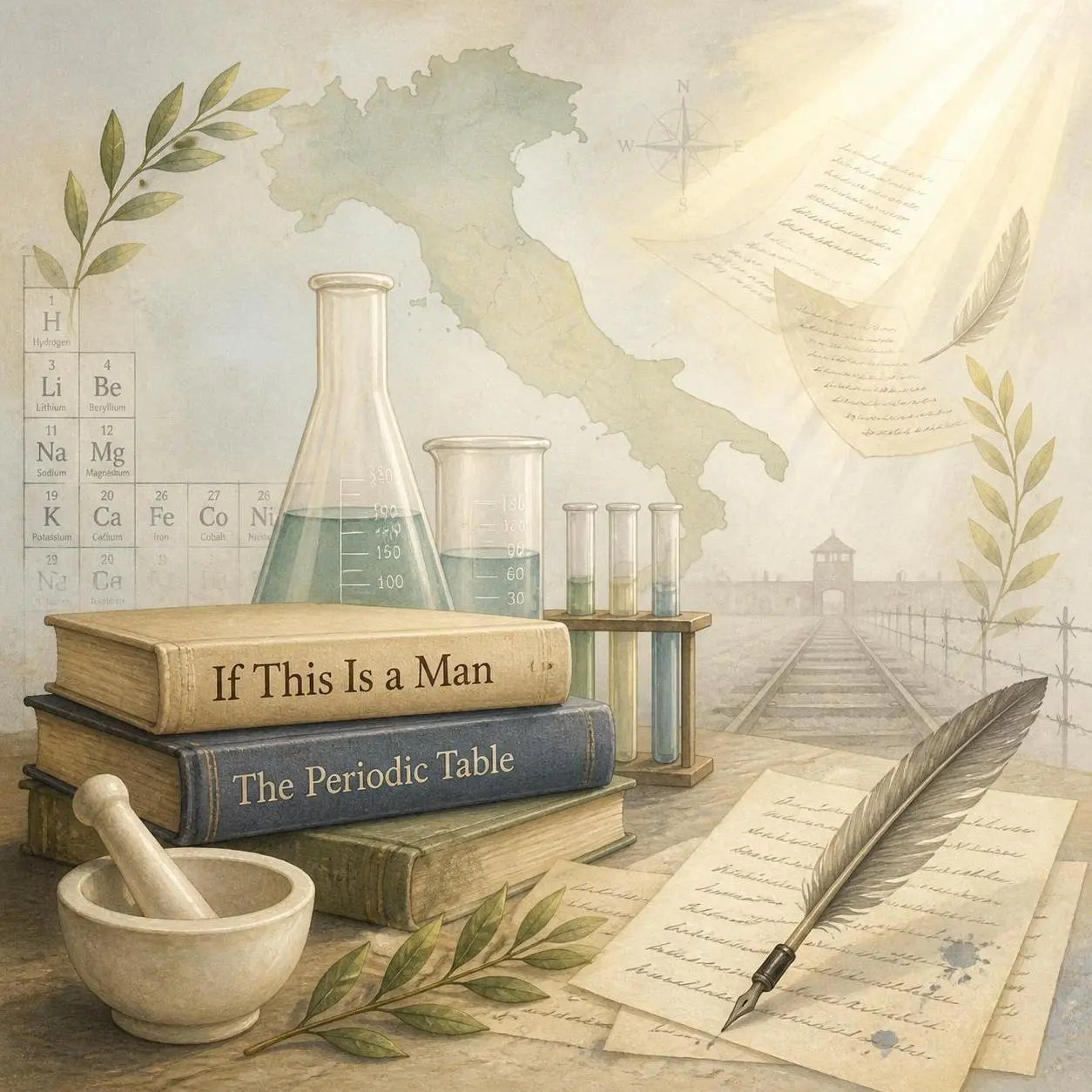
The true transformation in Levi's life began after liberation, when he chose to bear witness with unflinching analytical precision. His masterwork, Survival in Auschwitz (originally titled If This Is a Man), stands as perhaps the most intellectually rigorous firsthand account of the camps ever written—and this rigor is itself a form of moral courage.
Levi could have written a story of pure victimhood, or of redemptive survival, or of the triumph of the human spirit. Instead, he did something far more difficult: he refused to simplify the moral landscape. He wrote about the impossible choices prisoners faced—the moments when survival meant betraying others, when hunger overrode solidarity, when the system succeeded in making people complicit in their own degradation. He documented the rare moments of human kindness without sentimentalizing them. He examined his own compromises and moral failures with unflinching honesty, never allowing readers the comfort of viewing him as purely good or purely victimized.
This refusal to simplify was itself a transformation wrought by suffering. Levi's pre-war identity as a chemist—someone trained to observe precisely, to resist easy conclusions, to follow evidence—became the lens through which he examined his own trauma. The suffering had not made him a better person in the conventional sense; rather, it had made him a more honest one. His precision became a form of respect for the dead and for the truth. To simplify would be to betray both.
The Cost of Bearing Witness
Yet the article of Levi's transformation comes with a crucial qualification: the cost of bearing witness never fully healed. Levi struggled with depression and survivor's guilt throughout his life. He was haunted not only by his memories but by the knowledge that he had survived while so many others had not, and by questions about whether his testimony adequately captured what had been lost.
In 1987, after decades of writing, speaking, and bearing witness, Levi took his own life. This tragic ending complicates any narrative of redemptive suffering. It suggests that the transformation suffering can produce is not payment for pain, nor healing that erases trauma, but rather a hard-won commitment to truth-telling that carries its own psychological weight. Levi did not transcend his suffering; he integrated it into his identity as a witness, and that integration remained forever incomplete, forever painful.
What Transformation Actually Means
This distinction is essential to understanding how suffering can genuinely transform people for the better—not through magical redemption, but through the difficult work of converting experience into understanding and accountability.
Suffering can transform us when we refuse to waste it. This does not mean that suffering is good or necessary or deserved. It means that once we have endured something, we face a choice: we can let it destroy meaning entirely, or we can consciously extract from it the demands it places on us. For Levi, this meant bearing witness. For others, it means creating art, building community, fighting for justice, or simply refusing to let despair have the final word.
Takeaways
- Suffering as Transformation: Levi’s time in the concentration camp exemplified how profound suffering can lead to a deeper understanding of accountability and moral complexity.
- Randomness of Survival: His survival hinged on factors beyond personal virtue, emphasizing that nobility does not guarantee safety or existence amidst brutality.
- Bearing Witness: Levi’s commitment to documenting his experiences reflected a refusal to simplify the moral struggles faced in the camps, enabling a more nuanced understanding of humanity.
Reflection questions
- In what ways have your own struggles or hardships shaped your perspective on human nature and resilience?
- Can you identify a time when you witnessed suffering, either your own or someone else's? How did it affect your understanding of responsibility and accountability?
- In facing your own challenges, how do you prevent simplifying your experiences or those of others?
- How do you interpret the idea of "bearing witness" in your life? What does it mean to you to acknowledge and share difficult truths?